|
|||||||||
|
Big Island Hawaii REAL ESTATE SEARCH

Letter from Big Island, Hawaii - April 2026


Finding Balance: What Ongoing Tax Talks Could Mean for Local Families
.png)
Conversations around cost of living in Hawaiʻi are nothing new, but they’ve been getting more attention lately, and for good reason. From groceries to housing, everyday expenses continue to shape how people plan their lives here. That’s part of what’s driving the current discussions at the State Capitol around tax relief.
At the center of it are two different approaches, both aiming to ease the financial pressure on residents. One proposal keeps earlier tax relief measures fully in place, building on a plan passed in 2024 that totals about $1.8 billion in tax savings. For a typical household earning around $100,000, that could mean roughly $3,000 to $4,000 in savings per year, adding up to nearly $20,000 over several years.
The other approach takes a more gradual path. It keeps tax relief for most low- and middle-income households, covering about 90% of residents, while scaling back some benefits at higher income levels. The goal there is to balance immediate relief with long-term financial stability for the state.
While the strategies differ, the bigger picture feels familiar: finding a way to support local families without putting too much strain on essential services. It’s a balancing act that doesn’t have a simple answer, especially as the state continues to manage everything from infrastructure needs to disaster recovery.
For many households, even modest tax savings can make a noticeable difference, whether that goes toward daily expenses, savings, or long-term plans. At the same time, there’s also an understanding that public services, schools, and community programs rely on that same pool of funding.
What happens next will likely land somewhere in the middle, as both sides work toward a final version. These kinds of discussions tend to evolve, but they’re a reminder of how closely connected policy decisions are to everyday life.
In the end, it’s less about which path is chosen and more about whether the outcome feels sustainable, both for families trying to get ahead and for the broader community that depends on a steady, reliable system.
Tax Relief Tug-of-war: Lawmakers Divided on Balancing Budget and Savings
Why Faster Permits Matter More Than Ever
If there’s one part of building in Hawaiʻi that almost everyone agrees on, it’s this: the permitting process can take time, sometimes more than expected. Whether it’s a new home, an addition, or even a small improvement, delays can ripple into everything from construction schedules to overall costs.
That’s why a recent proposal gaining traction feels worth paying attention to. The idea is simple: invest in better training for the people handling permits, with the goal of making the entire process more consistent and efficient.
The plan includes annual training for permitting staff, focusing on updated building codes, clearer review standards, and the use of newer digital tools. There’s also a small but targeted investment, $25,000 in state funding, with $6,250 in matching county funds, to support these efforts. It’s not a massive budget item, but it’s aimed at improving how things function day to day.
One of the more practical goals is reducing the back-and-forth that often happens during reviews. When different reviewers interpret rules differently, it can lead to revisions, delays, and added costs. Keeping everyone on the same page, especially as codes evolve, could make timelines more predictable for homeowners and builders alike.
There’s also a push to modernize parts of the process using digital tools. Think simpler applications, less repeated paperwork, and systems that can pre-fill or route information automatically. Even small improvements like that can make a difference when multiple departments are involved.
For many people trying to build or improve a home, timing matters just as much as cost. Being able to better anticipate when a permit might be approved helps with scheduling contractors, ordering materials, and planning the next steps. It’s one of those behind-the-scenes changes that, if done well, can make the entire experience feel smoother.
In a place where housing availability continues to be a big conversation, even incremental improvements like this can have a wider impact. When processes become more efficient and predictable, it doesn’t just help projects move forward, it helps people move forward, too.
Source: Bill co-introduced by six Big Island lawmakers aims to speed up building permit process
When Support Shows Up: A Look at Community Relief in Challenging Times
There are moments when the strength of a community becomes most visible, usually after something difficult. Recent heavy rains and flooding across Hawaiʻi have been one of those moments, bringing both challenges and a renewed focus on how support reaches the people who need it most.
A recently approved relief effort is directing about $3.96 million toward Native Hawaiian households impacted by the storms. While numbers alone don’t tell the full story, they do give a sense of scale, and in this case, they reflect a broad, layered approach to recovery.
A large portion, up to $2.9 million, is being set aside to assist households in the hardest-hit areas. This kind of support can help cover immediate needs, from basic essentials to temporary stability while families figure out next steps. Beyond that, smaller but meaningful allocations are being directed toward strengthening the wider support system, including $100,000 for community resource hubs, the kinds of places people turn to for food, information, and connection during uncertain times.
There’s also recognition that recovery looks different for everyone. Some households may need direct financial help, which is where $410,000 in direct grants comes in. Others may be facing physical damage to their homes, and for them, $250,000 has been set aside for repair grants, typically ranging from $10,000 to $20,000 per household. It’s a reminder that rebuilding isn’t just about infrastructure, it’s about restoring a sense of normalcy.
An additional $300,000 is being allocated to support individuals affected by federal disruptions, showing how overlapping challenges, weather, economic shifts, and employment uncertainty, can all intersect at once.
What stands out in all of this isn’t just the funding itself, but how it’s being distributed: a mix of direct aid, community-based support, and longer-term recovery assistance. It reflects an understanding that resilience isn’t built in one way, it’s layered, just like the communities it supports.
In places like Hawaiʻi, where connection to land, home, and community runs deep, efforts like these quietly reinforce something important: even during difficult seasons, there are systems, and people, working to help keep others grounded.
Source: Office of Hawaiian Affairs approves nearly $4 million in disaster aid for Native Hawaiian households
Real Estate Market February 2026
|


My Listings at Pualani Estates March 2026
|

|
|

|


|


|


|
|

|
|

|

|
|
Letter from Big Island, Hawaii - March 2026
|
|||||||||
|


Hawai'i’s Ongoing Effort to Balance Taxes, Housing, and Everyday Costs
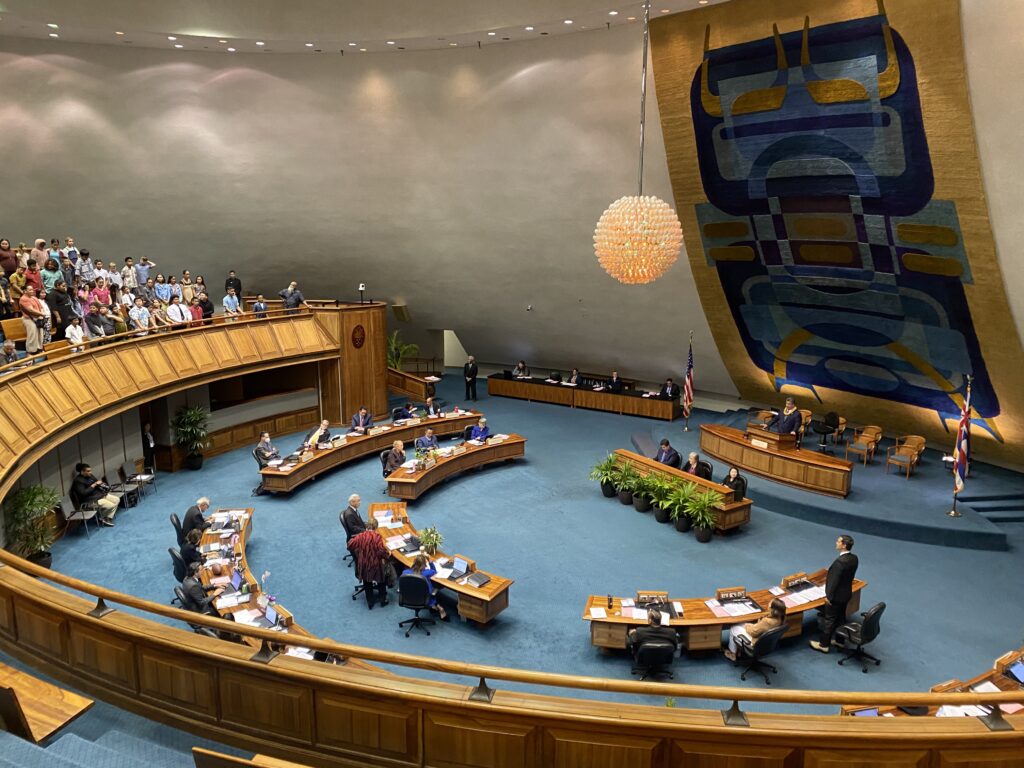
Each year, Hawaiʻi’s legislative session brings new conversations about how to support local families and strengthen island communities. The 2026 session, which runs through May 8, has once again placed a spotlight on topics many residents talk about often, the cost of living, housing, and how government policies can help ease everyday financial pressure.
A big part of the discussion this year centers on adjustments to the tax relief package approved in 2024, which was originally designed to provide long-term tax savings for residents. Lawmakers are now looking at ways to continue that relief while also expanding certain tax credits that directly support working families.
Under the current proposals, tax relief would continue for households earning up to $350,000 for joint filers, $262,500 for heads of household, and $175,000 for individual filers. Programs like the Earned Income Tax Credit and the Food Excise Tax Credit are also part of the conversation, since they help offset some of the everyday costs families face.
Housing is another topic closely tied to these discussions. One proposal being considered would adjust the state’s conveyance tax on higher-value home sales, particularly properties valued above $2.2 million. Lawmakers estimate the change could generate about $170 million in funding that may support housing programs, infrastructure improvements, and land conservation efforts across the state.
For many residents, these policy discussions connect directly to daily life. Whether it’s housing availability, the cost of groceries, or the ability to stay rooted in the same community, decisions made during the legislative session can influence the long-term direction of the islands.
At the end of the day, most people in Hawaiʻi share a similar hope, finding ways to keep the islands livable for local families while planning responsibly for the future. Conversations around taxes, housing, and public investment are all part of that larger effort.
Even when opinions differ, the goal remains the same: building a future where communities across Hawaiʻi can continue to grow, adapt, and thrive for generations to come.
Source: Hawaiʻi Income Tax Cuts: Lawmakers Chip Away At Promised Savings
Understanding North Kona’s Water Supply
Water has always played a quiet but important role in how communities grow in West Hawaiʻi. In North Kona, much of that water comes from the Keauhou aquifer, a natural underground source that supports homes, schools, farms, and local businesses across the region.
On average, about 14 million gallons of water are pumped from the aquifer each day. Even with population growth and development in the area, current usage remains well within the aquifer’s capacity. The state estimates the aquifer’s sustainable yield at around 38 million gallons per day, meaning current pumpage is only about 37% of that level.
Most of the water distributed by the county serves everyday needs. Roughly 53% goes toward residential use, helping supply homes throughout the community. Another 31% supports municipal uses, including schools, public facilities, and local services. Agriculture accounts for about 14%, reflecting the continued importance of farming across Hawaiʻi Island.
While there is still room within the aquifer’s current capacity, long-term planning remains part of the conversation. Studies looking at rainfall patterns and climate trends suggest groundwater recharge, the natural process that refills aquifers, could shift in the future. Some projections estimate recharge levels could decrease between 21% and 53%, depending on rainfall conditions over time.
To better understand these changes, the state has begun an adaptive management plan focused on monitoring the Keauhou aquifer more closely. The initiative includes improved data collection, regular reporting, and the construction of two deep monitoring wells, funded through approximately $4.2 million approved by the state Legislature in 2025.
For many people in Kona, water is simply part of daily life, something that flows quietly behind the scenes. But it also represents an important natural resource that helps support the region’s future. Careful monitoring and thoughtful planning help ensure that North Kona’s water supply can continue to meet the needs of the community while protecting the island’s natural systems.
In a place like Hawaiʻi, conversations about water often come down to balance, supporting growth while caring for the resources that make island life possible.
Source: North Kona’s Primary Aquifer Provides Plenty Of Water — For Now
A Step Toward Balance in Hawaii County’s Housing Landscape
A new proposal from the Hawaiʻi County Council is taking an important first step toward reshaping how high-value second homes are taxed across the island.
Under the measure, often referred to as Bill 128, the county is considering the creation of a Tier 3 residential tax category for non-owner-occupied properties valued above $4 million. The proposal recently passed its first reading, signaling early support for a more layered and equitable property tax system.
If adopted, the new tier would apply primarily to luxury second homes, many of which are located in West Hawaiʻi, and would build upon earlier changes that already introduced a higher tax bracket for properties valued over $2 million.
At its core, the proposal is designed to protect local homeowners while asking more from high-value, non-primary residences. Owner-occupied homes with exemptions would remain unaffected, helping to maintain stability for residents who call Hawaiʻi home year-round.
Supporters of the measure view it as a way to create better balance in the housing market, ensuring that those who benefit most from Hawaiʻi’s real estate landscape contribute more toward the services and infrastructure that sustain it. It also reflects a growing conversation across the islands about fairness, sustainability, and long-term housing access.
While final tax rates will be determined during upcoming budget discussions, the proposal opens the door for meaningful dialogue about how to support local communities, strengthen public resources, and thoughtfully manage growth in high-value property segments.
As the bill moves forward, it represents another step in Hawaiʻi County’s ongoing effort to align housing policy with the needs and priorities of the people who live and work here every day.
Source: Proposed new Hawaiʻi County tax rate for luxury second homes passes first reading