July 2, 2026

My Listing June 2026

MLS 730351

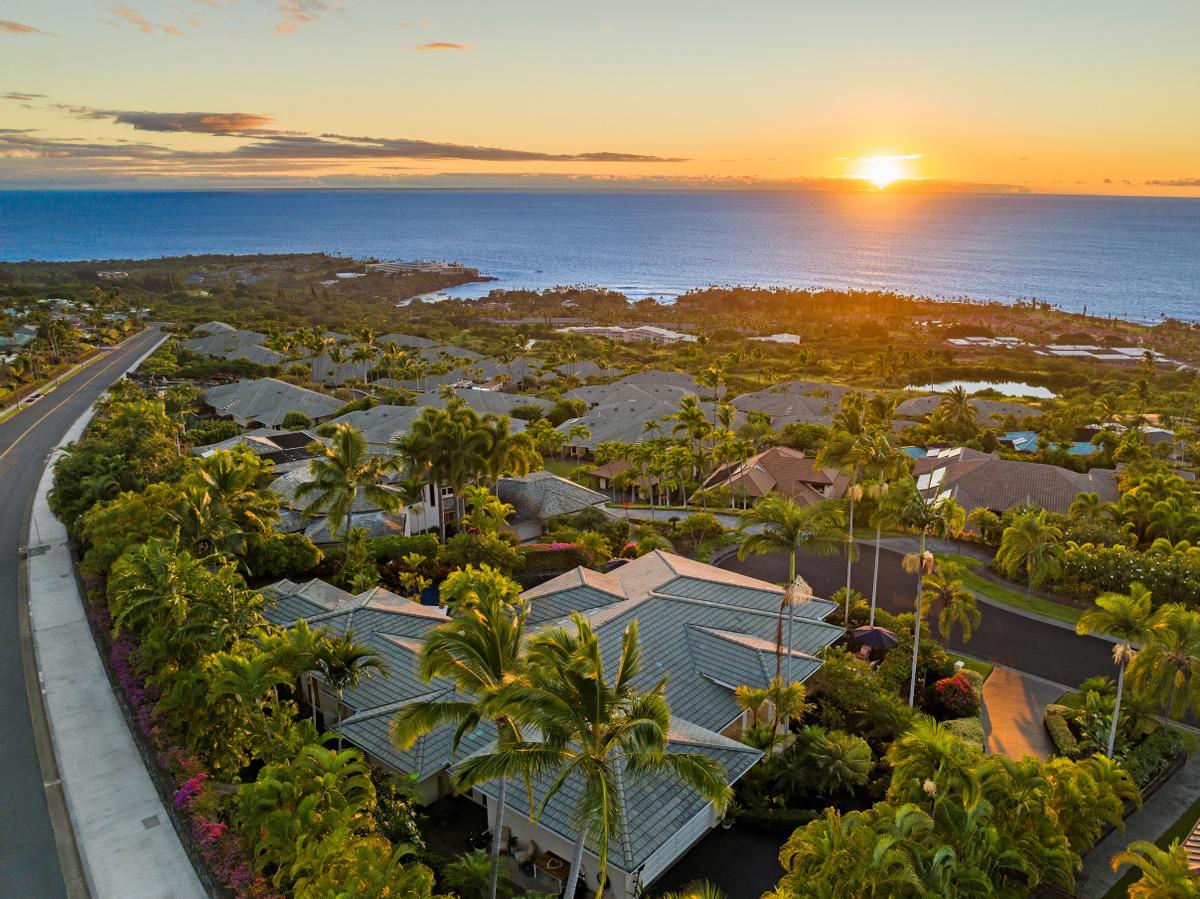
A True Statement Home

Bayview Estates in Keauhou

78-7021 Kewalo St., Kailua Kona, Hi 96740

4 Bed / 4 Bath & 2 Half Bath, Living Area 3,857 sq.ft.,
Land Area 16,479 sq.ft. 


Offered for $3,699,000 
 
Floating steps across a tranquil koi pond welcome you inside, where a vaulted great room with soaring 17.5-ft ceilings, abundant natural light, and refreshing cross breezes set the tone. Brazilian Tigerwood flooring enhances the open floor plan, seamlessly connecting the living room and gourmet kitchen to an expansive lanai. Just beyond, an infinity-edge pool, spa, and built-in wet bar create the perfect space for entertaining with breathtaking views.
More Photos and Info
3D Matterport
Experience the island retreat...
 
Posted in Buying a Home
July 1, 2026

Letter from Big Island, Hawaii - June 2026

This is Chiaki Yamada with KW-Big Island. As we reach the last day of June, we are officially halfway through the year. I hope you are enjoying the summer!

In June, we observed some changes in the real estate market compared to May. The inventory for the residential market increased by 5%, while the condo inventory saw a rise of 12%. However, the number of pending sales (properties in escrow) has decreased, indicating a slowdown in buying activity this month.

In my observation, one key factor contributing to this market slowdown is the decline of mainland buyers this year, who typically purchase second homes, future retirement properties, or investment properties. Amid global uncertainty, it appears that offshore buyers are currently holding off. Conversely, we have many local buyers who are actively seeking and purchasing properties in this market. As a result, we continue to see a vibrant Residential market for properties priced under $1.5 million.

I remain optimistic that once mainland buyers start returning to Hawaii, our market will rebound.

For buyers in the current market, there are more options available, and you may find greater room for negotiation compared to the past five years. Currently, the average sold price is 96% of the reduced price and 93% of the original price.


Kona Residential Market Overview (as of June 29, 2026)

Here’s a snapshot of the Kona residential market, highlighting key insights:
  • Active Listings: Increased by 5% compared to May (with inventory in the $1M to $1.5M range rising).
  • Pending Ratio: Decreased by 25%, indicating less buying activity in the $1.5M and above segment.
  • Average Days on Market: Properties are currently taking an average of 128 days on the market, which is similar to last month.

Please keep in mind that market conditions can vary significantly by price range, and it may take longer to find buyers in certain segments

Kona Condo Market Overview (as of June 29, 2026)
The inventory remains high, while buying activity has decreased compared to last month. While condo buyers are present in the market, they are currently hesitant to make decisions.

Here’s a snapshot of the Kona residential market, including key insights:
 
Active Listings: Increased 12% from May. Most inventory is between $500,000 and $1M.
Pending Ratio: Decreased by 54%, indicating the Buying Demand decreased.
Average Days on Market: Currently, properties are taking an average of 112 days

For those considering an investment in the Kona condo market, this may be an opportune time to explore potential deals, as increased activity could lead to favorable opportunities.

I am here to provide you with a detailed market analysis for your neighborhood. If you or anyone you know may be thinking of buying, selling or both, I would be happy to be of service!
Posted in My News
June 25, 2026

Keeping Generational Lands in Local Families

Across Hawaiʻi Island, some properties represent much more than a place to live. They hold generations of family history, cherished memories, and deep connections to the land. As property values continue to rise, however, some longtime families face a growing challenge: keeping ancestral lands in the family while managing increasing property taxes.

A proposal currently being considered by Hawaiʻi County explores one possible way to help. Known as the ʻĀina Kūpuna program, the measure would provide property tax relief for qualifying family-owned lands that have remained in the same family for 100 years or more. Eligible properties would also be limited to 20 acres or less, keeping the focus on longtime local families rather than large landowners or commercial properties.

The conversation is about more than taxes. It's about preserving places that connect families to their history, culture, and community. Many of these properties have been cared for through generations, and for some families, rising costs have made it increasingly difficult to continue that tradition.

Like many housing and land-use discussions in Hawaiʻi, there are important questions to consider. County leaders are also looking at how programs like this would affect public revenue and future budgets while continuing to fund essential services. Finding that balance will be an important part of the conversation moving forward.

Even so, it's encouraging to see thoughtful discussions centered on keeping local families rooted in the communities they have helped shape for generations. Preserving generational land isn't only about protecting property, it also helps preserve the stories, traditions, and sense of place that make Hawaiʻi Island unique.

No single program can address every housing or affordability challenge. But exploring ways to help families remain connected to lands that have been part of their lives for decades reflects a broader commitment to strengthening communities while honoring the island's heritage.

As Hawaiʻi continues to grow and evolve, finding practical ways to support both community stability and responsible planning can help ensure that future generations have the opportunity to build their own stories on the same land their families have cared for over the years.

Source: Adapted from reporting by Stefan Verbano, Hawaiʻi Tribune-Herald (June 2026).
Posted in Community News
June 9, 2026

Why the Permitting Process Matters to Hawaii’s Future

When people talk about housing in Hawaiʻi, the conversation often centers around affordability, availability, and the challenge of creating enough homes for local residents. But one part of the housing picture that receives less attention is the permitting process.

Before a home can be built, renovated, or expanded, plans typically move through multiple reviews and approvals. When that process works efficiently, projects can move forward with greater predictability. When delays occur, costs and timelines can become more difficult for everyone involved.

In recent years, there has been growing recognition that improving permitting systems is an important piece of supporting housing and community development. Efforts to modernize technology, improve coordination between agencies, and strengthen staffing can help create a smoother experience for homeowners, builders, and local businesses alike.

These improvements may seem administrative on the surface, but they can have a meaningful impact. A more efficient permitting process can help reduce uncertainty, improve communication, and allow projects to move forward more effectively while maintaining safety and building standards.

The importance of this work becomes even clearer when considering Hawaiʻi’s long-term housing needs. Various studies have estimated that tens of thousands of additional housing units will be needed statewide in the coming years to keep pace with demand. Meeting that need will require more than land and construction, it will also depend on systems that can support responsible growth.

What’s encouraging is that conversations about housing are increasingly focusing on both the big-picture challenges and the practical steps that can make a difference. While no single change can solve Hawaiʻi’s housing needs on its own, improving the processes that support housing development can help create a stronger foundation for future progress.

At its core, an effective permitting system benefits the entire community. Whether someone is building a home, adding a rental unit, renovating an existing property, or developing a larger project, a clear and predictable path forward helps support the broader goal of creating thriving and resilient communities across Hawaiʻi.


Source: Inspired by ongoing discussions about housing, permitting, and community development in Hawaiʻi.

Posted in Community News
May 29, 2026

My Listings - May 2026

 
MLS 729445

Exquisitely Renovated Condo with Panoramic Paradise Views!

Keauhou Akahi #406

78-7030 Alii Dr, #406, Kailua-Kona, HI 96740

2 Bed / 2.5 Bath, Living Area 895 sq.ft.


NEW PRICE !  $619,000

Surrounded by lush tropical landscaping and accompanied by the gentle sounds of birdsong, this residence offers a peaceful, garden-like setting that perfectly complements its sweeping ocean vistas. From the moment you enter, abundant natural light and cooling island breezes create a relaxed, open atmosphere.
More Photos and Info
3D Matterport
Stunning ocean and sunset views!
Posted in Real Estate News
May 27, 2026

Letter from Big Island, Hawaii - May 2026

This is Chiaki Yamada with KW-Big Island. I hope you are enjoying the beautiful early summer days. I love the vivid colors of the shower tree blossoms – a real indication that the summer season is in full swing.

Despite experiencing a market slowdown earlier this year, April brought positive news. We saw a remarkable increase in sales: +35% for residential properties and +22% for condos compared to April of last year. This indicates that buyer demand is gradually returning, making April the highest month for sales this year.

The market is currently witnessing a shift in pricing. Buyers are now more attuned to properties that are well priced according to today’s market conditions, rather than last year’s trends. We are also seeing a rise in new listings with reasonable prices, moving away from the “testing the market” approach.

For buyers in this market, there are more options available, and you may find greater room for negotiation than in the past five years. Currently, the average sold price is 96% of the reduced price and 93% of the original price.
----------
Kona Residential Market Overview (as of May 19, 2026)
Here’s a snapshot of the Kona residential market, including key insights:

  1. Active Listings: Increased by 3 % compared to April ($1M ~ $2M inventory increased)
  2. Pending Ratio: Decreased by 13% (While $1M ~$2M Buying demand decreased, $3M ~ $4M Buying demand increased) 
  3. Average Days on Market: Currently, properties are taking an average of 128 days (Taking longer than previous month)

Please keep in mind that market conditions can vary significantly by price range, and it is taking longer to find buyers in some segments.

In Kona’s condo market as of May 19, 2026, inventory remains high, while buying activity is low but steady. There is significant improvement in the pricing lower than $500,000 and the market has now changed from Buyer to Neutral.

Kona Condo Market Overview (as of May 19, 2026)
Here’s a snapshot of the Kona residential market, including key insights:
 
Active Listings: Remain at the same level from April. Most inventory is between $500,000 and $1M.
Pending Ratio: Increased by 24%, indicating the Market is improving (Buying demand increased in the listings priced under $500,000)
Average Days on Market: Currently, properties are taking an average of 117 days

For those considering an investment in the Kona condo market, this may be an opportune time to explore potential deals, as increased activity could lead to favorable opportunities.

I am here to provide you with a detailed market analysis for your neighborhood. If you or anyone you know may be thinking of buying, selling or both, I would be happy to be of service!
Posted in Community News
May 26, 2026

A Positive Step Toward Supporting Local Housing on Hawaii Island

Housing affordability continues to be one of the most important conversations across Hawaiʻi Island, and recent discussions at the County Council reflect a growing effort to support local residents while planning thoughtfully for the future.

One proposal currently being reviewed would slightly reduce property tax rates for many owner-occupied homes and affordable rental housing. Under the plan, the homeowner tax rate would decrease from $5.95 to $5.75 per $1,000 of taxable value, offering modest but meaningful relief for many local households.

At the same time, higher-value second homes and investment properties would see increased tax rates, including a new category for properties valued above $4 million. Revenue generated from that new tier is expected to help fund affordable housing and homelessness programs across the island.

Another encouraging part of the proposal is the creation of a separate “long-term rental” classification, designed to encourage more property owners to offer housing for local residents rather than short-term uses. The goal is to help create more stable housing opportunities for families who live and work on the island year-round.

What stood out during the public discussions was how much the conversation centered around community. Residents spoke about the importance of keeping housing accessible, supporting local families, and finding ways to help future generations continue building their lives here in Hawaiʻi.

While no single policy can solve housing challenges overnight, efforts like these show a willingness to explore solutions that prioritize balance and long-term sustainability. Even small adjustments can help create momentum toward a housing environment that feels more supportive and attainable for local communities.

As Hawaiʻi Island continues to grow, conversations like this reflect something hopeful: a shared interest in protecting the sense of home, connection, and opportunity that makes island life so meaningful for so many people.
 

Source: Hawaiʻi Tribune-Herald, May 2026.

Posted in Community News
May 7, 2026

Planning Ahead: What Hawaii’s Changing Population Means for Housing

One of the quieter shifts happening across Hawaiʻi is something that doesn’t always show up right away, but has long-term impact: the way the population is changing.

Recent projections suggest the state may need close to 60,000 additional housing units by 2050. A large portion of that, about 44,000 homes, would be needed for kūpuna as the population continues to age. It’s a significant number, but it reflects a broader trend already underway.

Over the past several years, the share of residents age 65 and older has grown from around 16% to more than 21%, and it’s expected to keep rising. By 2035, roughly one in four residents could fall into that age group. With that shift comes a different kind of housing demand, smaller homes, accessible layouts, and spaces that allow people to comfortably age in place.

At the same time, there’s another side to the story. Younger residents, especially those in their 20s and early 30s, continue to face challenges finding housing they can afford. In fact, nearly half of people from that age group who were born in Hawaiʻi are now living elsewhere. It’s a trend that’s been building for years, and it has ripple effects beyond just housing.

When younger households leave, it doesn’t just change neighborhoods, it impacts the workforce, local businesses, and even access to services over time. The connection between housing availability and everyday life becomes more noticeable the longer the gap exists.

What stands out is how closely these two trends are connected. As the need for housing grows, especially in the near term, with about two-thirds of those 60,000 units needed by 2035, the focus isn’t just on building more, but building in a way that works for different stages of life.

Housing has always been part of the larger conversation about staying rooted in Hawaiʻi. Whether it’s creating options for kūpuna to remain in their homes or making it more realistic for younger generations to put down roots, the goal is similar: keeping communities balanced, connected, and sustainable over time.

It’s not a quick fix, but it’s a conversation that continues to evolve—and one that shapes what the islands may look like in the decades ahead.

Source: Civil Beat, April 2026

Posted in Community News
May 1, 2026

Real Estate Market March 2026

The Sold Qty is showing a downtrend

Below, you can see the North Kona Median Price and Sold Qty changes, month to month, for the last two years. The Red line represents the Median Price, and the Blue line represents the Sold Qty. The ups-and-downs of the Sold Qty indicates the market is sensitive and unstable.

Below data comes from Hawaii Information Service.
 
 
Here’s an overview of the first quarter results, along with March 2026 data compared to March 2025. This reveals a notable slowdown in Kona's winter real estate market. Both residential and condo sales have experienced a continuous decline over the past a few months, largely due to a significant dip in buyer demand during what is typically regarded as the peak season for real estate.

North Kona Median Price Changes over the last 21 years

Please note that for first time in the last 14 years, the median price decreased in 2025 from the previous year.
Posted in Real Estate News
April 30, 2026

My Listing April 2026

MLS 726197

A Mixed-use Two Warehouse Buildings 
in the Heart of Waimea


64-1015 Mamalahoa Highway, Kamuela, HI 96743

Land 28,426 sq.ft,   Interior 14,935 sq.ft


Zoned Neighborhood Commercial 7.5

Offered for $6,999,000 
 
This fee simple Waimea commercial property offers two fully occupied warehouse buildings with a versatile mix of storage/garage, retail, and residential uses.

Building 1 is a warehouse structure featuring three individual storage/garage bays totaling approximately 5,000 square feet (about 1,666 square feet each), along with three one-bedroom, one-bath residential units totaling roughly 2,500 square feet.

Building 2 includes two large warehouse bays totaling approximately 4,485 square feet, one with a mezzanine currently used as an office. Adjacent to the warehouse is a retail space of 1,450 square feet. Above the retail space, the second floor offers two one-bedroom, one-bath residential units with a laundry room totaling 1,450 square feet.
More Photos and Info
A mixed-use Warehouse Buildings in the Heart of Waimea
 
Posted in Selling Your Home